
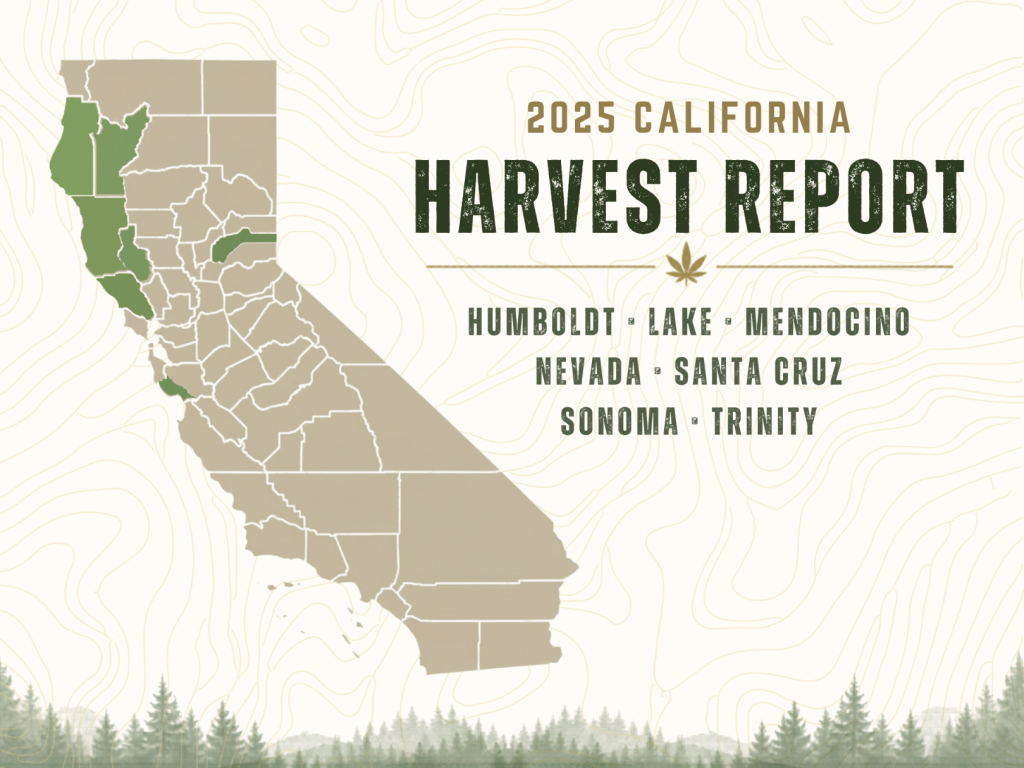
A well-attended event in Berkeley on Saturday, May 16 presented the Budist 2025 California Cannabis Harvest Report, with outdoor farmers represented from the report’s covered counties: Humboldt, Trinity, Mendocino, Sonoma, Lake, Nevada and Santa Cruz. Starting from DCC dashboard numbers and adding in the number of licensees producing outdoor crops, the report highlights farmers and cultivars in each region, and looks at statewide trends.
The 2025 outdoor cannabis harvest was the largest since 2022; however all counties in the report except Mendocino lost market share in California’s outdoor market in 2025 vs. 2024, as counties like Santa Barbara and Kings came onboard with large, multi-licensed farms, with much of the output going straight to distillate. There was quite a difference between counties, with Sonoma and Santa Cruz only licensing a handfull of outdoor farmers, with other counties producing millions of pounds at hundreds of farms. Local control, real estate prices, and weather variations impacted each county differently: counties saw a colder summer in 2025, with twice to 6x as much rain during harvest months.
Budist hopes to bring marketing methods from the wine industry’s appellations, terroirs, and vintages to the cannabis space, comparing cannabis-growing regions with the Champagne and Bordeaux valleys of France. Both flower and hash/rosin change year to year, depending on growing conditions and methods of curing or preserving. “Appellations tell the story of the season, and the relationship to variability, which has value in the marketplace,” it was said. Each farm reported its best-performing cultivar in the harvest report.
Caleb Chen of Budist, who presented the data, highlighted regional events such as the Trinity County Fair cannabis competition, open to homegrowers and licensed farmers, and to flower and hash. Also mentioned were the the Sonoma County Harvest Festival, the inspiration for the High Times Cannabis Cup; the Humboldt Showdown, also open to home growers and licensees; Lake County clone swaps; and this year’s Mendo Cup, which donated profits back to farmers.
On a panel on Appellations with Genine Coleman of Origins Council and Zoe Schreiber of CCIA (who also works for both a cannabis provider and a wine producer in Livermore), Hannah Whyte of the Humboldt County Grower’s Association noted that, “Appellations develop a relationship with land” and that legitimization fo the indstry provides the opportunity for keeping records and of “healing a lot of the wounds of hiding.” Working together with other farmers and educating the consumer are goals.
Schreiber, perhaps alluding to a pending bill in the CA legislature that would severly restrict regional elements on cannabis packaging, spoke of “running into a wall of limitations at the state level,” and said the industry needs to be “heard and present in face of new legislation, as a movement.”
Asked by an audience member about how small farmers can combat the attempt to file patents and corner the market in genetics likely to follow the recent federal rescheduling announcement, Coleman said that educating farmers about intellectual property rights is part of Legacy Genetics, a project involving Cal Poly Humboldt and UC Berkeley that will be holding a seminar on the topic in Sacramento on June 26.
Claudio Miranda from Budist spoke of the Medieval Dark Age when “ecclesiastical hierarchies suppressed knowledge, medicine, and light.” He called for a new Renaissance to spread all three. The event was held at the Berkeley Chapel of the Flowers event space, which seems to be part of that Renaissance.
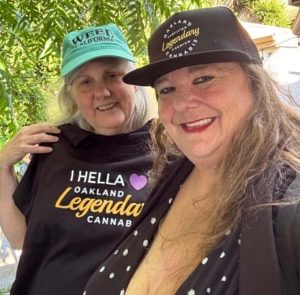
Also present at the Oaksterdam University booth at the event were representatives from the new Oakland Legendary Cannabis Certified Equity Label, the nation’s first initiative to promote city-verified equity businesses in the cannabis industry. The label lets buyers know they are supporting businesses that are invested in creating high-quality products with a priority on equity. “Oakland continues to lead with courage and conviction. During my time in Congress, I co-chaired the Cannabis Caucus and introduced the first bill calling for the establishment of cannabis equity programs to repair the harm done to Black and Brown communities,” commented Oakland Mayor Barbara Lee. “The Oakland Legendary label puts power back where it belongs, helping consumers make informed choices and ensuring those most impacted are leading and thriving in today’s economy. Oakland is proud to lead the way!”
Also see: Sungrown tells a story: Harvest Report shows California’s cannabis shift
Coming events:
Tuesday, May 26 • 12PM – 1 PM
Preparing for Schedule III: A Webinar for Cannabis Producers
National Craft Cannabis Coalition
Register
Thursday, May 28 • 10 AM
Schedule III in Adult Use States
Oaksterdam University
REGISTER NOW
Friday, June 26
Legacy Cannabis Genetics Research Dissemination Event
Capital Events Center, 1020 11th St., Sacramento