UPDATE 2/26/26 – The cannabis language in the bill has been erased, following opposition from some in the cannabis industry, concerned that it would open the door to broader shipping.
UPDATE 2/20/26 – During a chat with Capitol Weekly, new DCC chief Clint Kellum said (@ 19:46 in), that direct-mail options for cannabis could be “quite beneficial” to consumers, noting that most people are getting goods via Amazon, etc. Kellum said that the cannabis consumer has “quite a confusing market to deal with, in that there’s not widespread access across the state, you have intoxicating hemp cannabinoids that aren’t allowed in the state but are allowed at the federal level that make their way in through direct-to-consumer efforts, so there’s quite a bit of confusion, and having more traditional lines like direct-to-consumer would be nice.” However, Kellum said we were a long way off from such a plan, due to federal law.
1/25/26 – Asm. Patrick Ahrens (D-Silicon Valley) has introduced a bill, AB 1564, to allow for the shipment of certain medical products from specified cannabis license holders directly to patients. Ahrens’s attempt at the bill last year, AB 1332, passed unanimously in the Senate and Assembly last year; however Gov. Newsom vetoed it.
“While I appreciate the author’s goal of expanding patient access to medical cannabis, the proposed direct-shipping program would be burdensome and overly complex to administer,” Newsom said in his veto statement. “The Department of Cannabis Control (DCC) will need to revamp the California cannabis track-and-trace system, which will take significant resources and time. Moreover, this measure includes numerous restrictions on eligible products – many of which are unclear, overly narrow or unworkable, adding to the implementation challenge.”
As reported by Cannabis Business Times, according to a fiscal analysis of the bill from the Senate Appropriations Committee, the DCC estimated a one-time implementation cost of approximately $269,000 to modify the track-and-trace system, and ongoing annual costs of $472,000 to oversee shipments and ensure compliance with product restrictions. That annual cost represents less than 0.05% of what the state collected in taxable cannabis sales in 2024, according to the California Department of Tax and Fee Administration.
The bill would have allowed any microbusiness with an M-license whose licensed activities include retail sale, manufacturing, distribution, and outdoor cultivation may directly ship medicinal cannabis to a medicinal cannabis patient in the state. “Given that this measure allows just two businesses to ship medical cannabis directly to patients, the costs of administering this program far outweigh the possible benefits to patients,” Newsom claimed.
Dr. Laurie Vollen testified in favor of A.B. 1332, saying that 29 years after medicinal marijuana was legalized in California, “medicinal products have become virtually extinct in today’s cannabis marketplace. Long-term patients cannot find any of the products that they were using effectively five years ago. No dispensary or delivery service has a full complement of medicinal products suitable for serving the needs of a variety of cannabis patients, especially cannabis-naive patients desperately seeking to begin alternatives to dangerous and addictive pharmaceuticals.”
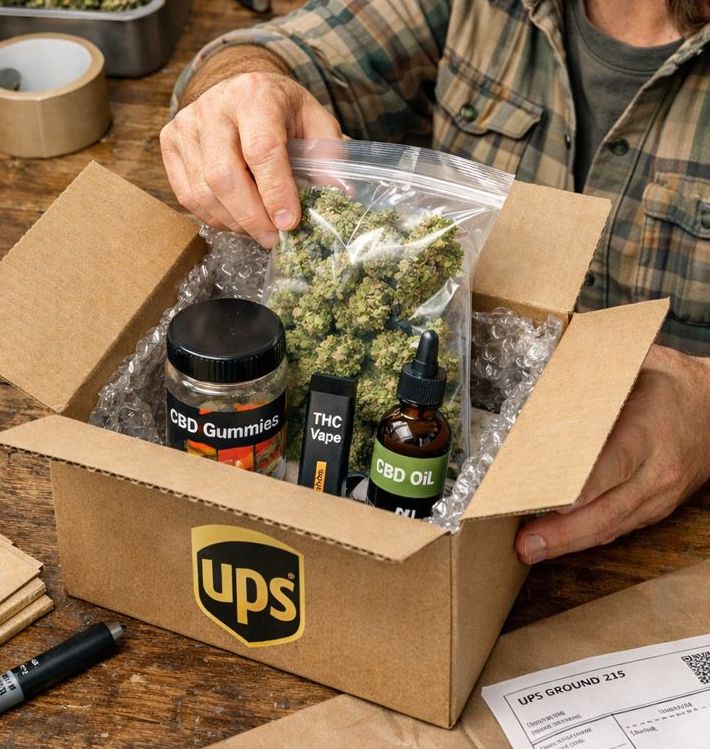
The legislation as written would limit product shipments to cannabis flower and tinctures manufactured with non-volatile solvents, mechanical extraction or infusion only, sent by common carriers like FedEx or UPS. Ahrens had included a three-year sunset provision in A.B. 1332 in an effort to allow lawmakers to revisit its effectiveness. The new bill AB 1564 extends that date out to January 1, 2030. More revisions are expected.
In his 2025 veto statement, Newsom said he remains open to working with state lawmakers to adopt strategies to effectively advance equitable access to safe medical cannabis. Some 57% of California cities and counties still prohibit retail cannabis businesses, according to the DCC.
“I need the shipping bill,” wrote one Cal NORML supporter. “I live in a legal cannabis desert, which creates both logistical and financial burdens for obtaining my necessary medication.”
Tell us: How might cannabis shipping benefit you?